
Recently, during a family trip to Tel Azekah in Israel, 3-year-old Ziv Nitzan was walking alongside her relatives when she found a stone. It turned out to be an ancient scarab amulet that dates back 3,800 years.
"Among the approximately 7,000 stones surrounding her, she chose one particular stone. After brushing away the sand, she noticed that this stone was distinct from the others," explained Omer Nitzan, who is Ziv's elder sibling, in a subtitled clip.
When she scrubbed it and cleared away the sand, we noticed that something was amiss," Omer went on. "I alerted my parents so they could witness the stunning stone, and together we recognized that we had stumbled upon an archaeological discovery!
Tel Azekah, the location where the young child discovered the artifact, is an renowned archaeological site situated in Israel’s Shephelah region, having been under excavation for approximately 15 years now. If the term Azekah rings a bell, then your dedication to biblical study certainly pays off; this very spot appears in the tale of David and Goliath as recounted in the First Book of Samuel.
They promptly "reported this" to the Israel Antiquities Authority (IAA), who consequently shared on Facebook that the young Ziv had actually stumbled upon a significant object.
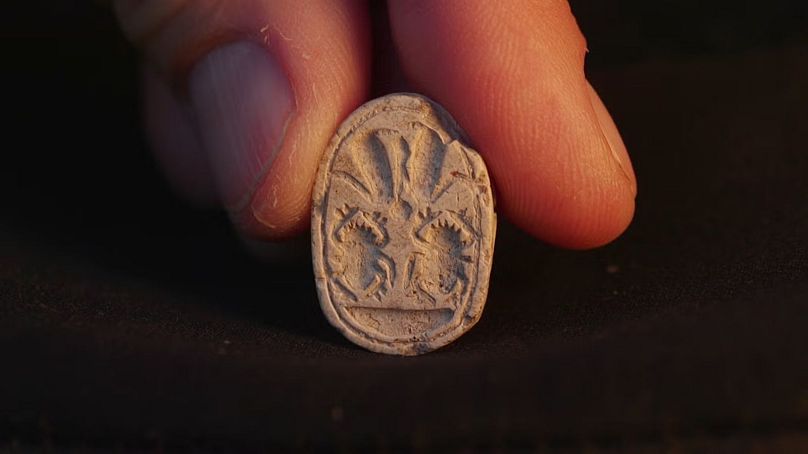
Daphna Ben-Tor, an expert in ancient amulets and seals, explained the importance of the artifact: it is a Canaanite scarab from the Middle Bronze Age period.
She mentioned that Canaanite scarabs served as both seals and amulets, discovered in "tombs, public structures, and residential areas." Occasionally, these items feature "symbolic representations and inscriptions indicative of spiritual convictions or social standing," she further noted.
As Ben-Tor pointed out, scarab beetles were considered sacred in ancient Egypt, representing rebirth—since the Egyptian term for scarabs derives from a verb that means "to come into existence." Consequently, these people saw the scarab as an embodiment of divinity.
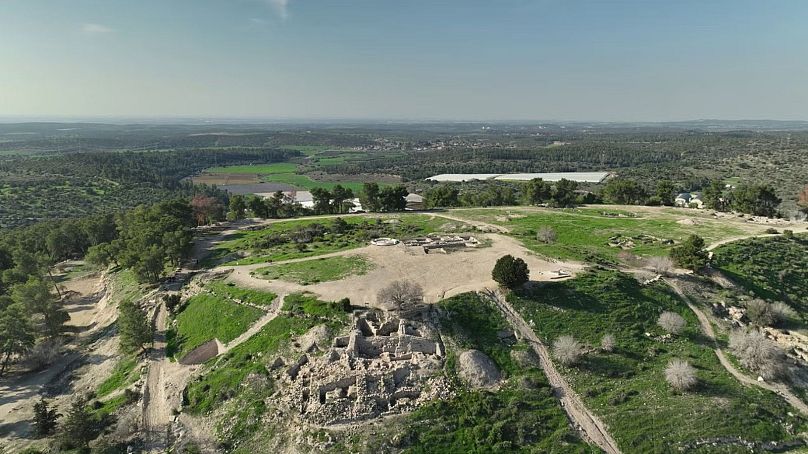
Archaeologists have discovered many artifacts at Tel Azekah, such as old city walls and farming buildings dating back to the time of the Judahite Kingdom.
"According to excavation evidence, during the Middle Bronze and Late Bronze periods, Tel Azekah was home to one of the most significant urban centers in the Judean lowlands," stated Oded Lipschits, who leads the archaeological project at Tel Aviv University.
The scarab uncovered by Ziv adds to an extensive collection of Egyptian and Canaanite artifacts unearthed in this area, highlighting the strong connections and mutual cultural impacts between Canaan and Egypt at that time.
In recognition of her discovery of the ancient amulet, Ziv Nitzan received an award for exemplary civic duty.