
- EXPLORE FURTHER: Ways humans might journey millions of light years to far-off worlds
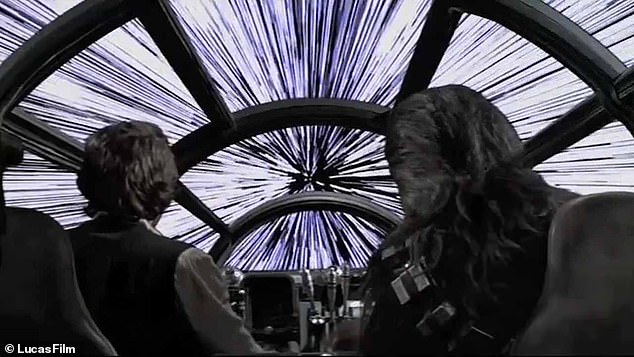
Anybody who was deeply fascinated during their upbringing with Star Wars will experience the excitement of witnessing Han Solo and Chewbacca pilot the Millennium Falcon into hyperspace for the first time.
In the films, hyperdrive engines allow ships like the Falcon to leap around the Universe faster than the speed of light to reach distant planets in just minutes.
However, as enthusiasts mark 'Star Wars Day' on May 4th, specialists assert that much of this advanced technology goes beyond mere sci-fi.
Scientists suggest that a genuine 'warp drive' in reality might enable spacecraft to leap between galaxies similar to what is depicted in Star Wars.
Instead of using fuel as rockets do to propel the spacecraft through space, warp drives have the potential to alter and extend spacetime, effectively bringing the final destination nearer.
Professor Tim Dietrich, a specialist in gravitational physics at Potsdam University, explained to MailOnline: "The allure of employing a warp drive lies in its potential to enable nearly instantaneous travel between two locations."
'Thus, theoretically, it might allow for interstellar travel, akin to depictions in science fiction.'
Nevertheless, the specialists caution that an actual warp drive would be much less feasible and considerably riskier compared to the hyperdrives depicted in movies.
What exactly is a warp drive?
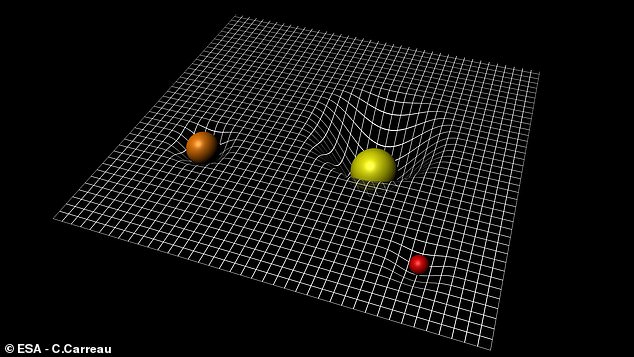
As per Einstein, masses curve and distort spacetime, similar to how weights placed on a rubber sheet create deformations.
Subsequently, the other masses on the sheet descend into these 'spacetime curves,' resulting in gravitational effects.
In 1994, physicist Miguel Alcubierre discovered that Einstein’s theory of spacetime made possible the development of an entirely novel kind of engine.
Dr. Katy Clough, a cosmologist at Queen Mary University of London and Professor Dietrich’s collaborator, explained to MailOnline: "A warp drive is a theoretical mechanism that could enable a spaceship to journey from point A to point B by warping spacetime."
'Normal rockets accelerate by burning and ejecting fuel, which allows them to speed up to cover distances faster.
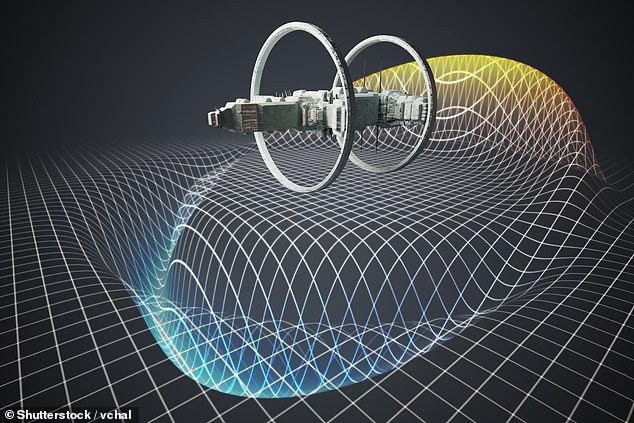
A warp drive essentially shortens the space in front of the vessel and stretches it behind, enabling the ship to travel from point A to B without requiring acceleration.
Similar to how the hyperdrive functions on the Millennium Falcon, a warp drive generates a 'warp bubble' of curved spacetime surrounding the vessel.
The vessel stays within a level area of spacetime at the center of the bubble and gets carried along with it as the bubble travels.
Dr Clough states: "This might sound like something out of a sci-fi story, and perhaps it is, but the concept that space and time are malleable and capable of being distorted is indeed true, forming the core principle behind Einstein’s theory of general relativity."
Could a warp drive enable travel among the stars?
The challenge of traveling between star systems akin to the spacecraft in Star Wars lies in the fact that the universe has a speed limit.
In addition to suggesting that warp drives could be physically feasible, Einstein's theories also state that nothing can travel quicker than the speed of light, which is roughly 300,000 kilometers per second.
This indicates that it would require more than four years to arrive at Proxima Centauri, our solar system’s closest stellar neighbor which lies 4.3 light-years away from us, even when moving at speeds very near to that of light.
Journeying to the center of the Milky Way would require approximately 26,000 years, which is far from the instantaneous travel depicted in movies.
The advantage of employing a warp drive is that a spacecraft could potentially circumvent this velocity limitation by taking advantage of an anomaly within general relativity theory.
The growth of spacetime does not adhere to any speed limits; hence, the warp bubble can travel at whatever velocity it desires.
At the same time, the spacecraft stays stationary within the flat region of spacetime enclosed by the warp bubble, which means it does not move relative to the surrounding space.
It might sound outrageous, but this physics loophole enables a vessel to seemingly travel faster than light speed without experiencing acceleration.
Travelling quicker than the velocity of light, a vessel can traverse any distance within an 'infinitesimally' brief timeframe.
NASA engineer Dr Harold 'Sonny' White posits in an essay that spacecraft could depart from Earth utilizing traditional rockets prior to positioning themselves towards their target and engaging the warp drive technology.
When sufficiently near, the warp drive would shut down at a secure range, and the journey would conclude using traditional means of propulsion.
Dr. White states: "With this method, a voyage to Alpha Centauri, as observed from Earth and according to spacecraft timekeeping, could be completed within weeks or months instead of decades or centuries."
How might it feel to travel in a warp drive?
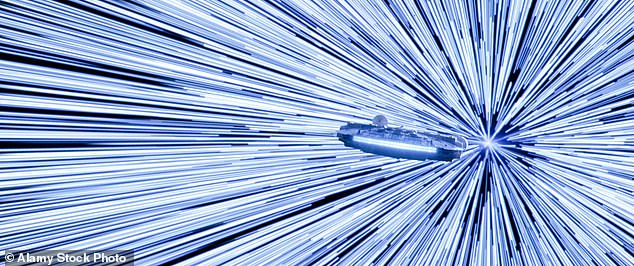
In Star Wars, entering hyperspace features an impressive visual spectacle of streaming lights and stars.
However, what would it actually feel like to gaze out of the window aboard a spaceship traveling at warp speed?
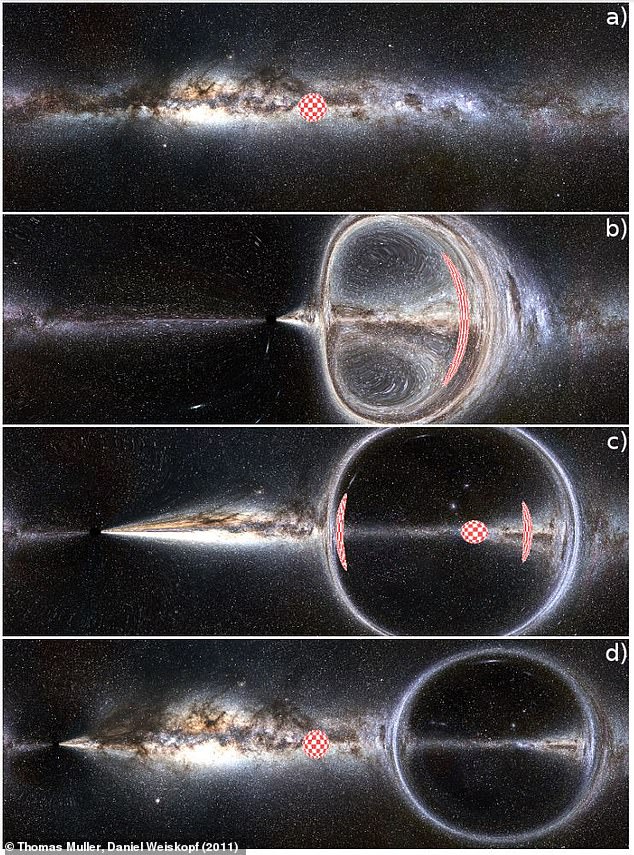
Dr Clough states: "If you observe the incoming starlight either forwards or backwards, the wavelength will appear compressed or elongated. As a result, objects in front seem bluer while those at the back appear redder."
Furthermore, the form of objects would appear warped, similar to how things look through a bent lens.
Sadly for Star Wars enthusiasts, Dr Clough indicates that Star Trek more accurately portrays this particular aspect.
Dr. Clough specifically mentions that the 'bullet shot' scene in "Star Trek Beyond" was inspired, albeit loosely, by how light might bend within the distorted space-time surrounding a warp bubble.
For enthusiasts of the series, this presents yet another disappointment: research indicates that people using warp travel wouldn’t actually witness starlight streaking past their windows.
A team of physics students from the University of Leicester found through their modeling that individuals onboard the Millennium Falcon would actually observe a flat, luminous disk.
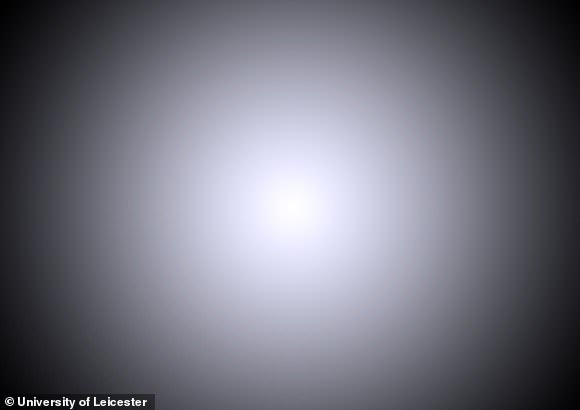
This occurs due to the fact that the cosmic microwave background radiation, which is residual energy from the Big Bang, would shift from microwaves into visible light wavelengths as a result of the Doppler effect.
Could a warp drive actually be feasible?
However, before you begin filling your luggage for a journey to Alpha Centauri, specialists caution that an actual warp drive may still be far from reality.
This is due to the fact that a warp drive needs what’s known as 'exotic matter,' which refers to matter possessing negative energy.
Dr Clough states: "Imagine spacetime as an elastic sheet that sags under the weight of massy items. Positive energy entities cause a depression in this fabric, leading other heavy bodies to be drawn towards these dips — thereby illustrating why gravity pulls things together."
Nevertheless, in this image, negative mass would instead cause the sheet to lift upward, forming a hill from which other objects move away.
Through the application of negative energy, future space travelers could mold spacetime into the exact configuration required to generate a warp bubble.
Even though this might sound as fantastical as the Force, negative energy is indeed a genuine outcome of quantum physics, and researchers have succeeded in generating minute quantities of it in laboratory settings.
"Scaling this up to create a protective bubble around a sizable vessel, requiring an amount of energy several times greater than that emitted by the sun, remains firmly within the domain of science fiction," explains Dr. Clough.
Travelling quicker than the speed of light also brings about a series of challenges that might create significant difficulties for those exploring outer space.
Professor Dietrich cautions that employing a warp drive could lead to 'causality paradoxes as it surpasses the speed of light,' an occurrence the universe may prevent.
However, just because this technology surpasses our comprehension, it doesn't imply that it's unachievable.
A number of researchers think that warp drive technology might become possible within just about a century.
Professor Geraint Lewis, from the University of Sydney, informed ABC News that the universe may already contain mysterious substances possessing negative energy.
Professor Lewis stated: "There are indications that the type of materials we require do exist in our universe, but whether we can gather them and construct a warp drive remains uncertain."
Professor Lewis remarked, "Einstein's theory has already reached a century of existence, yet we've barely begun to uncover its depths."

'In the coming 100 or even 1,000 years, I believe we'll uncover much more information about the cosmos, and perhaps this ultra-rapid transportation will become achievable.'
Hunting for warp drives
And if there happens to be someone zipping through hyperspace in a distant galaxy, Dr. Clough and Professor Dietrich believe we ought to be capable of locating them.
Similar to how plasma functions within a fusion reactor, the unconventional material driving a warp engine would be highly volatile and thus necessitate containment through an intricate forcefield.
Should that containment field fail, the exotic matter would rapidly dissipate.
Doctor Clough and Professor Dietrich investigated the scenario that unfolds right after the failure of such a containment field.
Professor Dietrich explains: "In such cases, the bubble turns unstable and implodes, causing the spacetime deformation to break up and generate ripples that spread outward – these ripples are known as gravitational waves, which theoretically can be observed reaching our planet."
'In our galaxy, these waves might be quite powerful, making them theoretically detectable over the noise produced on Earth.'
Even though he cautions that the waves produced by vessels shorter than a kilometer wouldn’t register with our present detection equipment due to their frequency, this implies we could identify any nearby use of warp drives.
Dr Clough states: "Tim [Professor Dietrich] is doubtful and believes we won’t observe anything significant; however, even though I’m certain he’s correct, I still find it intriguing enough to warrant giving it a try."
'It is thrilling to consider that, should we not develop a warp drive ourselves, another entity within our galaxy might have cracked the code, allowing us to identify their usage of it.'
Dr. Clough remarks, "Should anybody possess an extra billion pounds for constructing a high-frequency gravitational wave detector, we would be grateful for your contact!"
Read more