
- SEE ALSO: Two siblings in California battling for survival following consumption of a salad
Eight individuals required hospitalization in California following consumption of a homemade salad tainted with... Clostridium botulinum - a potent nerve toxin capable of inducing paralysis.
According to a recent CDC report, approximately 31 individuals participated in two gatherings held in Fresno County on June 21 and June 22, 2024. At these events, a salad containing raw nopales—prickly pear cactus paddles—was provided for consumption.
A 42-year-old woman started experiencing dizziness, blurred vision, a sagging eyelid, sore throat, gastrointestinal issues, and trouble swallowing within just a few hours.
Although they first paid little attention to her symptoms, medical professionals started to believe that she might have botulism—a rare but serious illness caused by a toxin produced by bacteria. uncommon yet severe toxicity targeting the body’s systems Nerves can be affected, leading to trouble breathing, loss of muscle movement, and potentially fatal outcomes.
By June 27, ten individuals—each of whom had consumed the salad—had received medical care at one of two hospitals located in Fresno County, with five cases reported at each facility, displaying signs similar to botulism.
As a result, the CDC The Fresno County Department of Public Health, along with the California Department of Public Health, initiated an investigation aimed at identifying the source of the widespread sickness.
Following several days of laboratory analysis, authorities finally determined that the raw nopales included in the salad—left without refrigeration in temperatures reaching 100 degrees Fahrenheit and served over two consecutive days—were tainted with Clostridium botulinum.
Shortly afterward, eight out of the ten patients received diagnoses for the condition—making this one of the most significant recorded cases of foodborne transmission of the disease in history. California .

Nopales, commonly used in traditional Mexican cuisine and often referred to as prickly pear cactus, have lately become favored in various recipes for their health benefits.
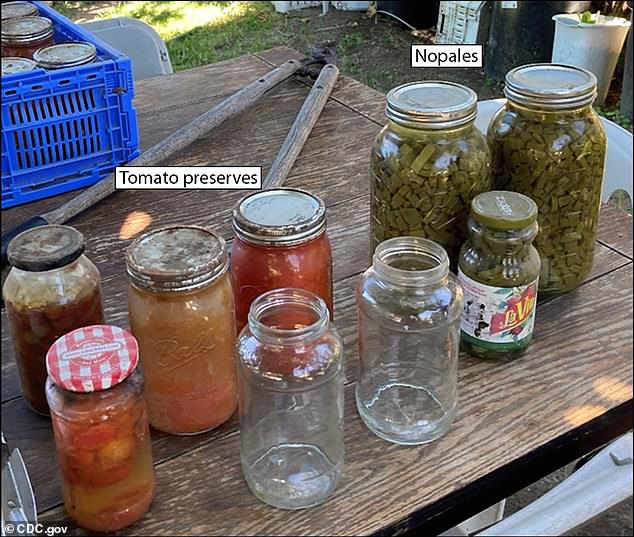
Authorities verified that among the eight individuals, one person prepared the salad with raw onions, ripe tomatoes, and homemade preserved cactus paddles kept in repurposed industrial-grade glass containers.
Based on the CDC case report, the individual preparing the salad submerged empty jars in boiling water before mixing them with diced raw nopales and a little salt.
After filling the jars completely, she secured them with fresh metal lids and kept them outdoors in a shed at the back of her property for six weeks—a method she claimed to have used consistently over many years.
Nevertheless, she did not realize that she had unintentionally set up an ideal environment for *C. botulinum* spores to multiply, since these bacteria flourish in conditions of reduced oxygen levels, minimal acidity, canning environments containing sufficient moisture at temperature ranges from about 4°C to 50°C .
Later, Norma Sanchez, a communicable disease specialist from the Fresno County Department of Public Health, stated that they discovered the tainted cactus by going through garbage bins.
Spores of this bacteria They commonly appear on the outer layers of fruits and vegetables as well as in seafood, and under these circumstances, quickly multiplied on the surface of raw and canned prickly pear cacti.
Of the eight individuals diagnosed with botulism, all experienced blurred vision, seven suffered from a raspy voice, six reported feeling lightheaded, and an additional six encountered trouble swallowing.
Of the eight individuals diagnosed with clinical botulism, they were the sole diners who consumed the nopales salad; notably, the 42-year-old female patient—who displayed the most acute symptoms—ate this dish at both gatherings.

Consequently, every patient remained hospitalized for durations ranging from two to 42 days, with six individuals needing admission to an intensive care unit and two requiring support through invasive mechanical ventilation.
In its case report, the CDC subsequently verified that all individuals diagnosed with botulism had not only survived but also made a full recovery.
Botulism is an uncommon yet severe illness triggered by a bacterial toxin affecting the nervous system, typically resulting from contaminated food or wounds.
The CDC states that typical signs of botulism involve challenges with swallowing, weakened muscles, blurred vision, sagging eyelids, impaired vision, unclear speech, respiratory difficulties, and problems moving the eyes.
In cases of foodborne botulism, these symptoms of typically begin 12 to 36 hours after the toxin enters the body depending on the level of exposure to the toxin.
If not treated promptly, the infection may lead to muscular weakness, paralysis, and in some instances, fatality.
Individuals with paralysis must often learn anew how to walk, speak, and carry out routine daily activities.
According to the CDC, approximately 25 cases of foodborne botulism occur annually in the United States, which makes the condition quite uncommon.
Approximately 5% of individuals who contract botulism succumb to the disease, as reported by the Centers for Disease Control and Prevention (CDC). Those who survive may face permanent disabilities and require extensive rehabilitation through intensive physiotherapy.
The Fresno Health Department advises individuals to adhere to correct storage and preparation techniques to minimize the likelihood of contracting botulism.
Any food that could become contaminated needs to reach an internal temperature of 240–250°F throughout.
Read more